




Is Stress Throwing Your Hormones Off? The Stressors We Don’t Always Think About
By Dr. Amina Hersi MD (Women's health expert)
Last week, we talked about something a lot of you had noticed: periods behaving strangely during the heatwave.
Some arrived early. Some were late. Some people even reported bleeding twice in one month.
And while there are many reasons why a menstrual cycle can change, it got us thinking about something bigger.
Stress.
Not just the emotional kind, either.
Your body can experience stress from heat, disrupted sleep, illness, under-eating, over-exercising and significant changes in your life. And because the systems that regulate our stress response, metabolism and reproductive hormones don't operate in isolation, what happens in one area can sometimes ripple into another.
But before this becomes yet another article telling you that you need to "lower your cortisol", there is something important we want to say:
Stress is a normal part of being human.
The goal isn't to live a perfectly stress-free life. That's neither realistic nor necessary.
It's about understanding what stress is, recognising when your body might need a little more support, and building resilience for the things we can't always control.
First: What Actually Counts as a Stressor?
When we hear the word "stress", we often think about feeling overwhelmed at work or having too much on our to-do list.
But a stressor is simply something that places a demand on us — physically, psychologically or emotionally.
Some of life's biggest recognised stressors include:
-
The death of a close family member or spouse.
-
Divorce, marital separation or a significant relationship breakup.
-
Losing a job, changing careers or experiencing persistent financial worries.
-
Developing a major illness, experiencing an injury or managing a chronic health condition.
-
Moving home.
-
Retirement.
-
Pregnancy and the birth of a child.
-
Major changes to our daily routine.
And here's something we sometimes forget: a life event doesn't have to be "bad" to be stressful.
Having a baby can be deeply joyful and still completely transform your sleep, routine and responsibilities.
Getting married can be a celebration while also involving months of planning and significant change.
Starting a dream job is exciting, but your brain and body still have to adapt to a new environment, new expectations and a new routine.
Stress isn't a moral judgement on an event. It's part of the body's response to change and demand.

Your Brain, Stress and Your Hormones
One of the body's major stress-response systems is the hypothalamic-pituitary-adrenal axis, often shortened to the HPA axis.
The hypothalamus is a small but incredibly important area of the brain involved in regulating everything from temperature and hunger to sleep and reproductive function.
When the brain perceives a stressor, a cascade of signals ultimately prompts the adrenal glands to release hormones including cortisol.
Cortisol isn't the enemy.
We need it.
It helps regulate our energy availability, metabolism, immune responses and normal daily rhythms. Cortisol naturally rises and falls throughout the day.
Problems are more likely to arise when the demands being placed on the body become persistent or overwhelming, particularly when they're combined with things such as inadequate nutrition, poor sleep or illness.
And that brings us back to our heatwave.
Heat itself is a physical stressor. Add several nights of poor sleep, dehydration, changes in appetite and disrupted routines, and suddenly the body may be dealing with several stressors at once.
That doesn't mean a few hot nights will "ruin your hormones".
It simply means that our bodies respond to the environments we live in.

When Not Eating Enough or Exercising Too Much Affects Your Cycle
Nutrition itself can become a physiological stressor when the body consistently isn't receiving enough energy for its needs.
One of the clearest examples of this is functional hypothalamic amenorrhoea.
This is a condition in which signalling from the hypothalamus that helps regulate the menstrual cycle becomes disrupted. It can occur in the context of low energy availability, significant weight loss, restrictive eating, high levels of exercise and psychological stress.
Essentially, when the body perceives that resources are limited, reproductive function can become deprioritised.
Importantly, you don't necessarily have to look underweight for low energy availability to affect your body.
Someone can be exercising intensely while not eating enough to meet their individual energy requirements, even if their weight appears "normal".
This is one reason we're cautious about wellness advice that simply tells women to eat less and exercise more in the name of "balancing hormones".
Movement is beneficial.
Good nutrition is beneficial.
But more exercise and less food isn't always better.
Your body needs energy, protein, carbohydrates, fats, vitamins and minerals to carry out the thousands of processes happening behind the scenes every day.
Sometimes supporting your hormones starts with something remarkably unglamorous: eating enough.

Sleep Is Hormonal Health Too
If you've ever had a terrible night's sleep and felt completely unlike yourself the next day, there's a reason.
Sleep and our hormonal systems are closely connected.
Poor or insufficient sleep can influence the body's stress response and cortisol rhythms. Sleep disruption can also affect insulin sensitivity and hormones involved in hunger and appetite regulation.
Then there's the knock-on effect.
You're exhausted, so you move less.
You crave quick sources of energy.
You might reach for sugary foods more often.
You don't have the energy to cook.
You feel more emotionally reactive.
Then you sleep badly again.
This doesn't mean you need eight hours of perfect sleep every night or your hormones will fall apart.
Bodies are resilient.
But if poor sleep has become your normal, improving your sleep environment and routine may be one of the simplest places to start.
Keep your bedroom cool where possible. Reduce light at night. Try to maintain a reasonably consistent sleep and wake time. And give yourself time to wind down rather than expecting your brain to switch instantly from scrolling to sleeping.

What About Childhood Trauma and PMOS or PCOS?
There has been a lot of discussion online about adverse childhood experiences, trauma and hormonal conditions, particularly PMOS (previously PCOS).
And this is an area where we need to separate interesting emerging research from pop psychology.
A 2025 pilot study titled The Impact of Childhood Abuse and Neglect on the Development of Features of Polycystic Ovary Syndrome investigated associations between childhood emotional and physical abuse and neglect and features associated with PCOS.
The researchers were exploring whether certain adverse childhood experiences might be associated with the later development of PMOS / PCOS features.
This is an interesting area of research, particularly because we know that experiences in childhood can have long-term associations with physical and mental health.
But there are some important caveats.
The aim of this study was not to create a hierarchy of trauma.
It wasn't designed to tell us that being bullied is "equivalent" to losing a parent, for example. Different experiences can be recorded or grouped within research looking at childhood adversity, but that does not mean researchers are claiming those experiences are emotionally identical or have identical consequences.
Nor does this study establish that childhood trauma causes PMOS.
An association is not the same thing as causation, and a pilot study is, by its nature, an early exploration of a research question rather than the final word on it.
There are plenty of people living with PMOS who do not report significant childhood trauma.
PMOS is a complex condition influenced by multiple interacting factors, including genetics, metabolic health and reproductive hormone signalling. There is unlikely to be one universal explanation for why every person develops it.
For some people, childhood adversity may eventually prove to be one piece of a much larger puzzle. For others, it may have little or no relevance to their PMOS at all.
So if you've seen content online suggesting that you need to uncover hidden childhood trauma to understand why you have PMOS, you can take that claim with a healthy degree of caution.
Your hormones are not a psychological puzzle you failed to solve.
Science is allowed to investigate associations without every association becoming an explanation for every individual.
Study: The Impact of Childhood Abuse and Neglect on the Development of Features of Polycystic Ovary Syndrome: A Pilot Study (2025).

Adult Stress Matters Too
There's another reason to be careful when every conversation about stress and hormones immediately becomes a conversation about childhood.
Stress doesn't stop when we turn 18.
Grief can happen at 25, 45 or 75.
You can experience a difficult divorce, lose your job, become a carer, develop a chronic illness or suddenly find yourself worrying about how you're going to pay your bills.
You can become a parent and have your entire routine change overnight.
You can experience bullying as an adult.
You can go through something incredibly difficult that never appears on an ACE questionnaire.
Our past can influence our health, but our present matters too.
And sometimes there isn't a neat psychological explanation at all.

All This Talk About Stress Is Stressing Me Out
We get it.
Sometimes wellness content turns stress itself into another source of stress.
You're told cortisol is making you gain weight.
Stress is ruining your hormones.
You're not sleeping enough.
You're not exercising enough.
You're exercising too much.
And now you're stressed about being stressed.
So here's our alternative perspective:
Your stress response is not something you need to fear.
It's a normal biological system designed to help you respond to the world around you.
We cannot stop difficult things from happening.
We cannot prevent every bereavement, illness, financial worry, sleepless night or unexpected change.
What we can sometimes influence is our capacity to recover.
Instead of pursuing a stress-free life, it may be more helpful to think about resilience.
Resilience doesn't mean pretending everything is fine.
It means giving yourself and your body resources that may help you cope with life's demands and recover when things are difficult.

Building Resilience Doesn't Have to Cost Anything
Wellness has become an industry, but many things that support resilience are completely free.
Spend time outside.
Move your body in ways you enjoy.
Call someone you trust.
Laugh.
Rest when you're tired.
Protect some time when nobody needs anything from you.
Get daylight in the morning.
Put your phone down occasionally.
Eat regular meals.
Maintain routines that make your days feel predictable.
Practise your faith or spirituality if that's meaningful to you.
Spend time with people who make you feel safe.
None of these things will magically remove life's problems.
But resilience is often built through small, repeated actions that give our nervous system opportunities to recover.
And importantly, resilience looks different for everyone.

Nourish Your Body Through Stressful Seasons
Stressful periods are often exactly when looking after ourselves becomes harder.
Meals become irregular.
Sleep disappears.
We rely more heavily on convenience foods.
And if you menstruate, you may also be losing nutrients through your period at a time when you already feel depleted.
This isn't about trying to supplement your way out of stress.
It's about making sure your body has the basic resources it needs.
Start with food.
Aim for regular, nourishing meals containing protein, fibre, carbohydrates and healthy fats. Staying hydrated matters too — particularly during hot weather.
If fluctuating energy and sugar cravings are making stressful days harder, building balanced meals can help support steadier glucose levels.
Chromium contributes to the maintenance of normal blood glucose levels and normal macronutrient metabolism, which is why you'll find it in some of our formulations.
Magnesium also plays numerous roles throughout the body, including contributing to normal psychological function and the reduction of tiredness and fatigue. You'll sometimes see claims online that stress or cortisol simply "depletes magnesium". The relationship is more nuanced than that: prolonged stress may influence magnesium status, while inadequate magnesium may also affect the body's response to stress. Rather than viewing magnesium as a cortisol antidote, think of it as an essential mineral the body needs every day.
And if you experience heavy menstrual bleeding, or you've had an unusually frequent period, iron is another nutrient worth thinking about. Menstrual blood loss can contribute to iron deficiency in some people, particularly when periods are heavy. Our Iron & Energy Restore combines iron bisglycinate with vitamin C, methylfolate and vitamin B12. If you suspect iron deficiency or have persistent fatigue, however, speak to a healthcare professional about appropriate testing rather than simply assuming you need iron.
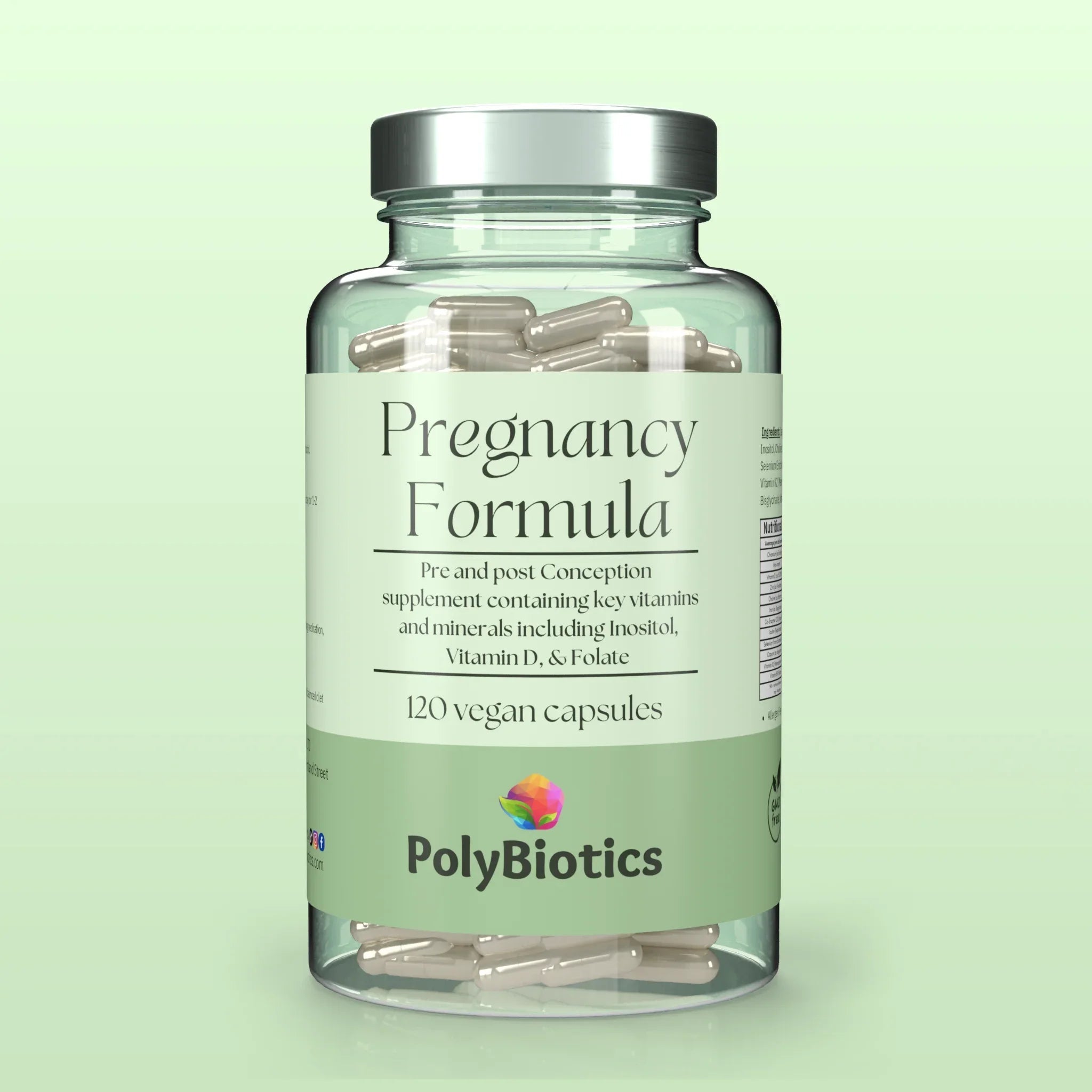
Inositol is another nutrient we talk about frequently at PolyBiotics. It has roles in cellular signalling and is an area of ongoing research in metabolic and reproductive health. Our approach has always been to view supplements as exactly that — supplements to the foundations, not replacements for them.
Food first.
Sleep where you can.
Movement that nourishes rather than punishes.
And targeted nutritional support where it's appropriate for you.

The Bottom Line
Your hormones don't exist in a vacuum.
Heat, sleep, nutrition, energy availability, illness, exercise and significant life events can all place demands on the body.
Our experiences in childhood may also influence aspects of our long-term health, and this is an important area of ongoing research. But emerging associations shouldn't be turned into simplistic social-media narratives that suggest every hormonal condition can be traced back to trauma.
Sometimes you have PMOS because you have PMOS (formerly PCOS).
Sometimes a late period is just a late period.
Sometimes you're tired because you haven't slept.
And sometimes you're stressed because something genuinely stressful is happening.
We don't need to pathologise every normal response our bodies have to life.
Perhaps the most useful question isn't:
"How do I eliminate stress?"
But instead:
"What does my body need from me while I'm going through it?"
Maybe it's sleep.
Maybe it's nourishment.
Maybe it's movement.
Maybe it's magnesium.
Maybe it's a blood test.
Maybe it's talking to someone.
Or maybe it's simply recognising that you're going through a lot right now and giving yourself permission to make things a little easier where you can.
Because we can't control everything that happens to us.
But we can give our bodies the best possible foundations from which to respond.

Share:
0 comments
Blog posts
-

The Wellness Trends Women Should Question
Why some of today's biggest wellness trends are built on evidence that doesn't always reflect female physiology. By Dr. Amina Hersi MD Wellness trends have never been more popular. Open social media and you'll quickly be told that the healthiest...
-

Food vs supplements: this isn't a competition
Some brands compare their supplement's calories to breakfast, as if it's meant to replace food. It isn't. Here's what your diet gives you that no capsule can, and where the real gaps lie.
-

Is Stress Throwing Your Hormones Off? The Stressors We Don’t Always Think About
Stress isn't just about feeling overwhelmed. Heat, poor sleep, under-eating, over-exercising and major life changes can all place demands on the body. We explore how stress interacts with your hormones, what the science really says about childhood trauma and PCOS, and why building resilience, rather than trying to eliminate stress entirely, may be a more helpful approach.


